

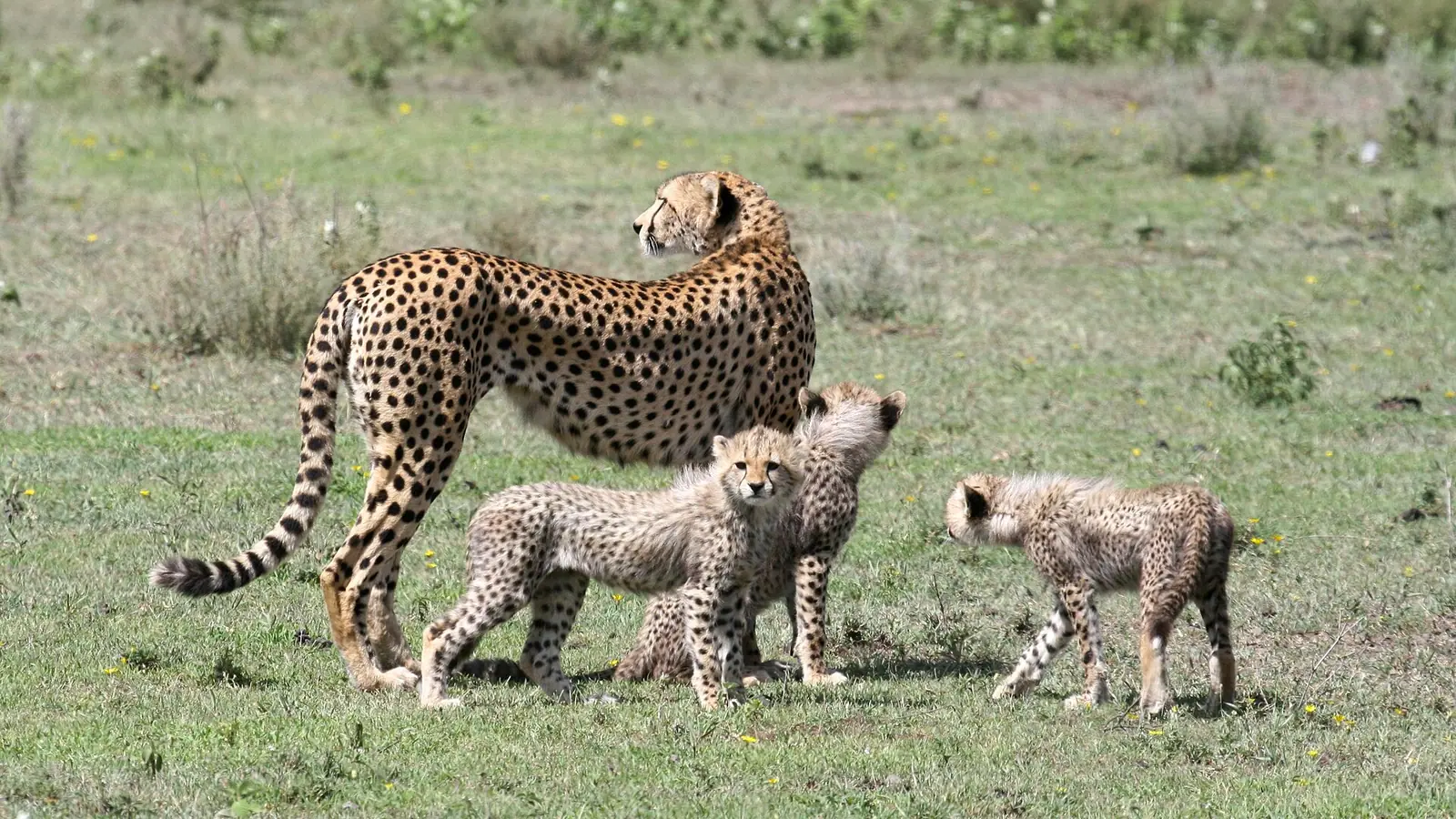
African Cheetah
Cheetah in Tanzania
The cheetah is built for speed: a light body, long legs, a flexible spine and a long tail for balance. In a short sprint it can reach around 100 kilometres per hour, faster than any other land animal. Unlike lions and leopards, cheetahs hunt mostly in daylight, which makes them easier to watch.
Cheetahs need open ground, where they can spot prey such as gazelles and impalas and run them down. Mothers raise their cubs alone and move them often to keep them hidden from lions and hyenas.
The best place to see cheetahs in Tanzania is the Serengeti, especially the southern and eastern plains around Ndutu and the Gol Kopjes, where they are often seen during the calving season from January to March.
Good to know
- The black “tear marks” on the face are thought to reduce glare from the sun.
- Cheetahs cannot roar; they chirp, purr and growl.
- A sprint only lasts a few hundred metres before the cat must rest.
Where to look: Serengeti, Ngorongoro Conservation Area.
Safaris where you may see cheetahs
 See All Safari Tours
Photo credits
- Acacia trees in Tarangire: Diego Delso, CC BY-SA 4.0
- African Cheetah: Christoph Strässler from Oberdorf BL, Schweiz, CC BY-SA 2.0
- Crater World: Ngorongoro & Empakaai: Halidtz, CC BY-SA 4.0
- Great Migration River Crossing: Eric Inafuku, CC BY 2.0
- Lake Natron, Ngorongoro & African Village: Richard Mortel from Riyadh, Saudi Arabia, CC BY 2.0
- Natron Volcano Trek & Flamingo Lake: Richard Mortel from Riyadh, Saudi Arabia, CC BY 2.0
- Ngorongoro & Tarangire Walking Safari: Reginald Victor Runyoro, CC BY-SA 4.0
- Ngorongoro Sunrise at the Crater Rim: Diego Delso, CC BY-SA 4.0
Photos from Wikimedia Commons, used under the licences named.