

 Safari
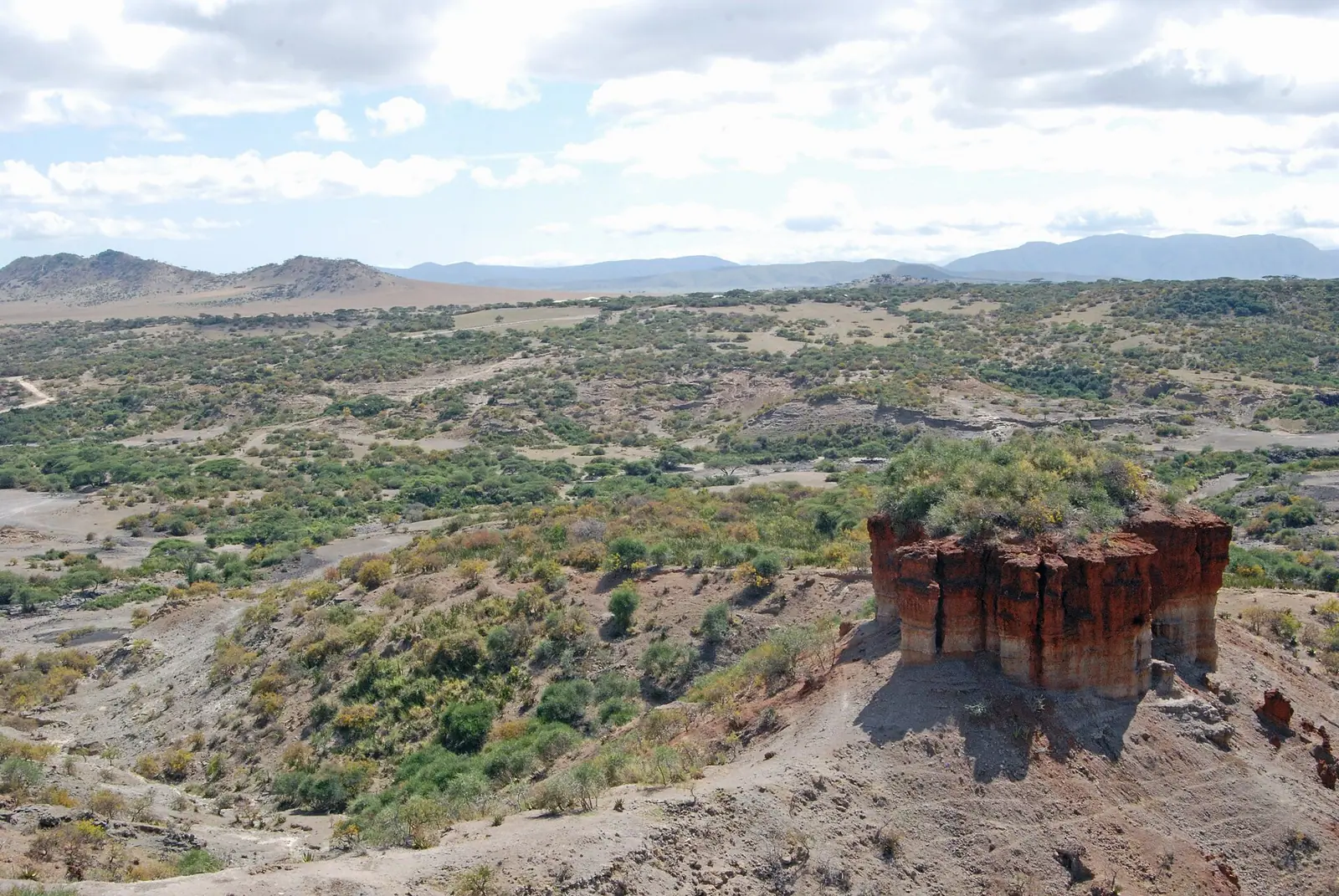
On the road between the Ngorongoro Crater and the Serengeti, a dry ravine cuts through the plains. It does not look like much, but Olduvai Gorge is one of the most important places in the world for understanding where we come from.
Why Olduvai is famous
Over millions of years, layers of volcanic ash and sediment built up here and were later cut through by a river, exposing a long record of life in the past. From the 1930s, the archaeologists Louis and Mary Leakey and their team found stone tools and fossils of early human species here, some of them almost two million years old, including Homo habilis and Paranthropus boisei.
The gorge gave its name to the Oldowan stone tools, among the oldest tools made by our ancestors. Not far away, at Laetoli, footprints left in volcanic ash about 3.6 million years ago show that early humans already walked upright.
Visiting Olduvai
A small museum on the edge of the gorge explains the finds, and a guide gives a short talk overlooking the excavation sites. A visit takes about an hour and fits easily into the drive between Ngorongoro and the Serengeti.
Read more about the Ngorongoro Conservation Area.
Photo credits
- Olduvai Gorge: Harvey Barrison from Massapequa, NY, USA, CC BY-SA 2.0
Photos from Wikimedia Commons, used under the licences named.
Curious to discover more of Tanzania?
Our team in Arusha would be happy to answer your questions and help you plan your safari, climb or beach holiday.