

Kilimanjaro Packing List
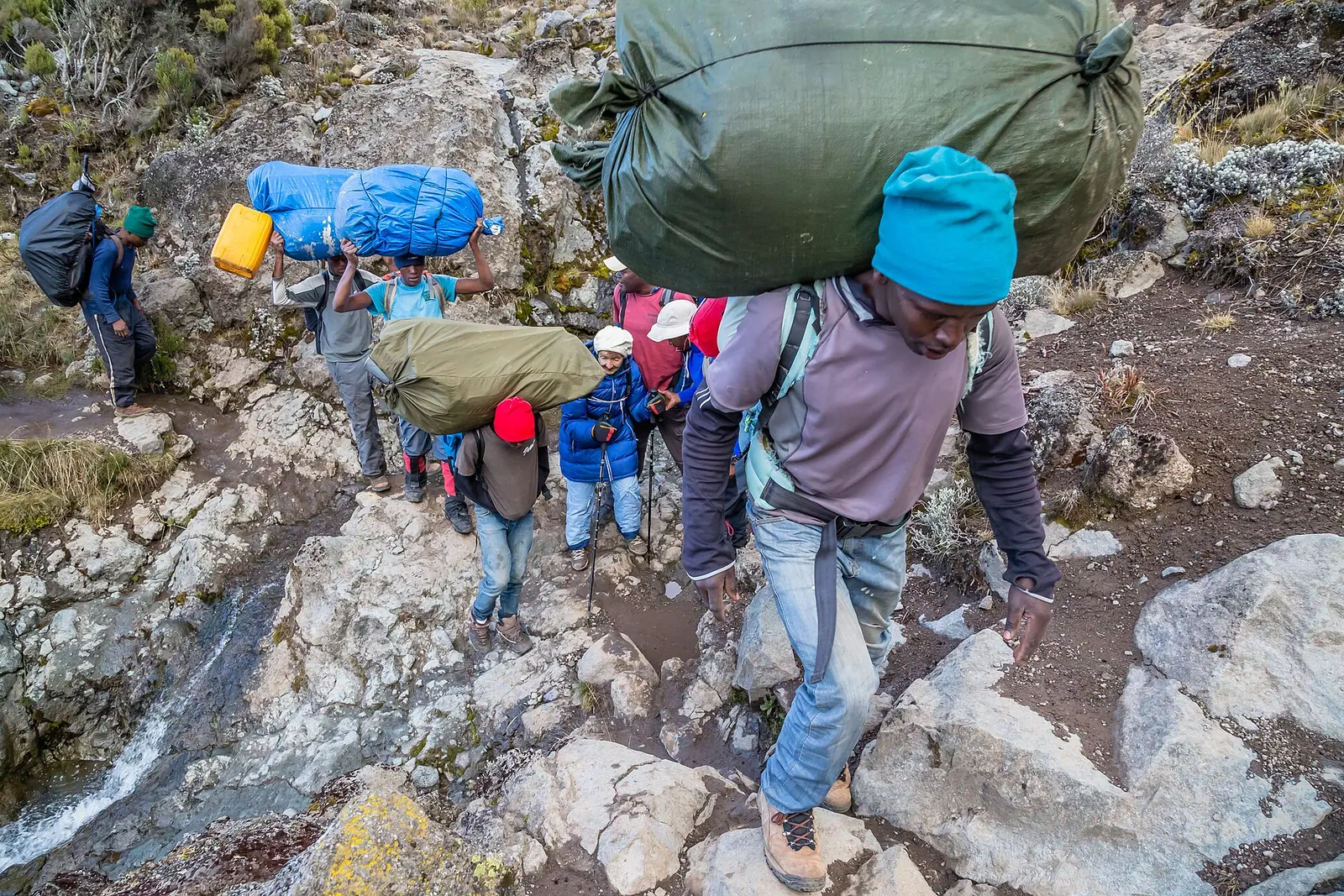
Kilimanjaro takes you from warm rainforest to an arctic summit in a few days, so what you pack matters. You need clothes for heat, rain and hard frost, good boots, and a warm sleeping bag, but not much else: our porters carry your main bag between camps, and you walk with a small daypack.
This list covers everything you need. Items marked optional add comfort but you can do without them. If you are missing something, most gear can be rented in Moshi or Arusha; tell us what you need when you book and we will arrange it.
Clothing
Dress in layers that you can add or take off as the temperature changes. Avoid cotton next to your skin: it stays wet and makes you cold. Merino wool and synthetic fabrics dry quickly and keep you warm when damp.
Base and mid layers
- 2–3 short- or long-sleeved base layer tops (merino or synthetic)
- 1–2 pairs of thermal long johns
- 1 fleece jacket or warm mid layer
- 1 light fleece or long-sleeved shirt for the warm lower slopes
- 2 pairs of trekking trousers (zip-off legs are handy)
Outer layers
- A warm down or synthetic insulated jacket for summit night and evenings
- A waterproof, breathable jacket with a hood
- Waterproof over-trousers
- Insulated trousers for summit night (or extra thermal layers)
Head and hands
- A sun hat with a brim
- A warm hat that covers your ears
- A buff or neck gaiter
- Thin liner gloves
- Warm, waterproof gloves or mittens for summit night
- Sunglasses that block UV (category 3 or 4)
Footwear
On your feet
- Waterproof hiking boots with ankle support, worn in before the trip
- Comfortable shoes or sandals for camp
- 4–5 pairs of hiking socks (wool or synthetic)
- 1 pair of thick warm socks for summit night
- Gaiters, to keep mud and scree out of your boots
Why it matters
- New boots cause blisters: walk at least 30–40 km in them before you come.
- Change into dry socks every evening and keep one pair only for sleeping.
- On the descent your toes push into the front of your boots, so trim your toenails before the climb.
Sleeping and bags
Sleeping
- A sleeping bag rated to at least −10 °C (comfort), or colder for the Crater Camp climb
- A sleeping bag liner (optional, adds warmth)
- A small travel pillow (optional)
- Earplugs (optional)
Bags
- A soft duffel bag of about 70–90 litres for the porters to carry (no hard suitcases)
- A daypack of about 25–35 litres with a rain cover
- Waterproof dry bags or strong plastic bags to keep clothes and sleeping bag dry
- A small lock for your duffel
Park rules limit what a porter may carry, so keep your duffel to about 15 kg. Anything you do not need on the mountain can stay at your hotel.
Gear and accessories
On the trail
- Trekking poles, especially for the descent
- A head torch with spare batteries
- Water bottles or a hydration bladder for 3 litres
- An insulated cover for one bottle, so it does not freeze on summit night
- Sunscreen (SPF 50) and lip balm with SPF
Useful extras
- A power bank to charge your phone and camera
- Snacks you like: energy bars, nuts, chocolate
- Hand warmers for summit night (optional)
- Binoculars for the forest and the views (optional)
- A notebook or a book for the evenings (optional)
Health and hygiene
First aid
- Any medicines you take, in your daypack
- Painkillers (paracetamol or ibuprofen)
- Blister plasters
- Rehydration salts
- Medicine for an upset stomach
- Altitude medicine, if your doctor recommends it
Washing
- Wet wipes and hand sanitizer
- A quick-dry towel
- Toothbrush and toothpaste
- Toilet paper
- Small bags to carry your rubbish back down
Your guides carry a first-aid kit and emergency oxygen, but bring your own personal medicines and talk to your doctor before the trip about altitude and any health conditions.
Documents and money
- Your passport, visa and a copy of each
- Travel insurance details, with cover for trekking up to 6,000 metres and helicopter evacuation
- Your yellow fever certificate, if you travel from or through a country where it is required
- US dollars in cash for tips: bring recent, undamaged notes, as old or torn notes are often refused
Packing tips
- Pack your daypack for every weather. Rain jacket, warm layer, water, snacks, sunscreen and your medicines should always be with you, because the porters walk ahead and you will not see your duffel until camp.
- Keep electronics warm. Batteries drain fast in the cold: keep your phone and spare batteries in your sleeping bag at night and in an inner pocket on summit night.
- Plastic bags are banned. Tanzania bans single-use plastic bags, and they may be taken from you at the airport. Use dry bags or reusable bags instead.
- Don’t buy the cheapest gear. Good boots, a warm jacket and a warm sleeping bag make a real difference to your comfort and safety. For the rest, mid-range gear is perfectly fine.
- Ask before you buy. If you are not sure what to bring, send us your list and we will check it with you.
Questions about gear?
Tell us what you have and what you are missing, and we will help you get ready or arrange rental gear in Moshi or Arusha.
Photo credits
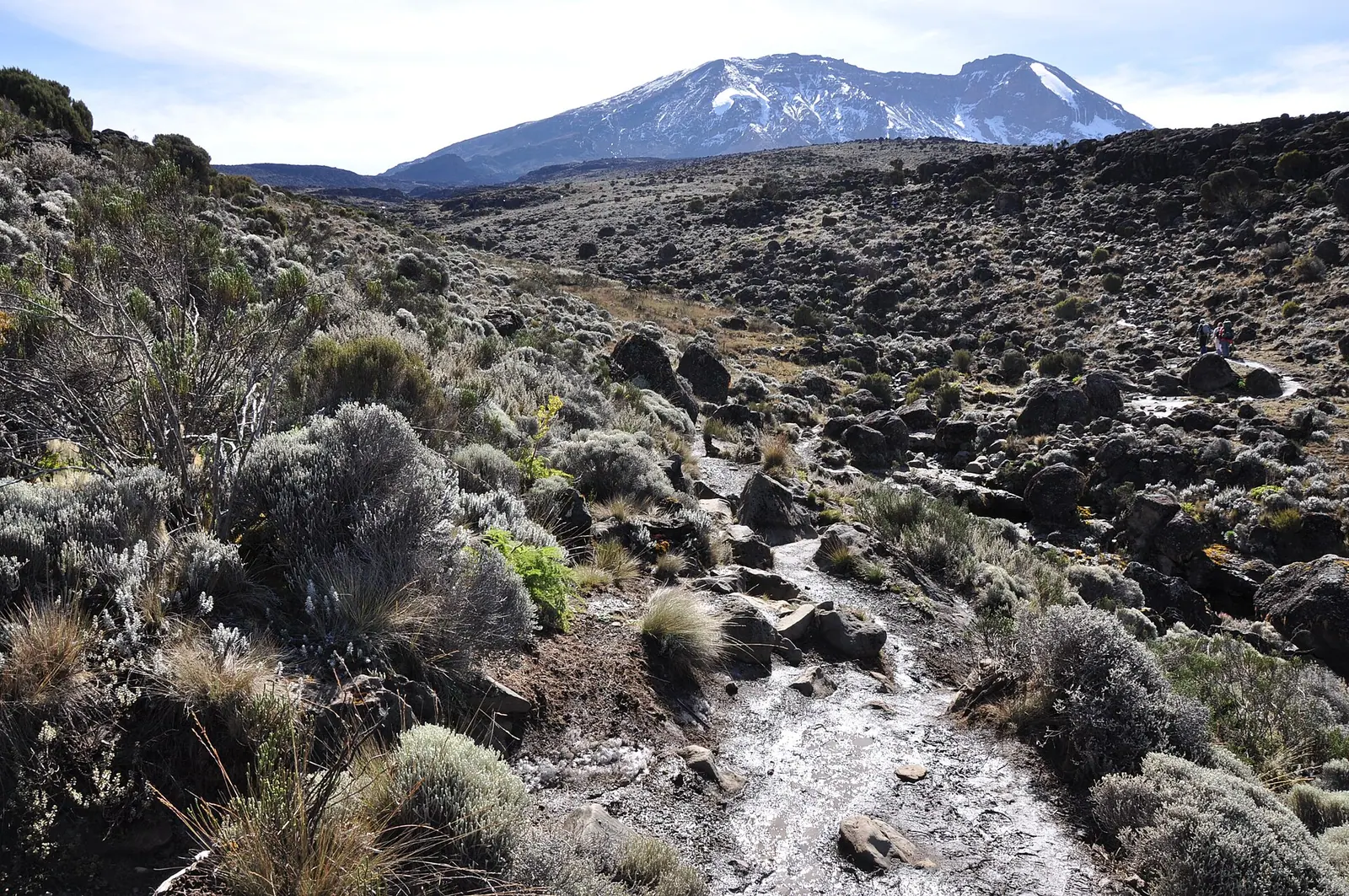
- Moorland and heath with Kibo ahead: Jorge Láscar, CC BY 2.0
- Porters carrying loads up the Barranco Wall: Sergei Andreichuk, CC BY-SA 4.0
Photos from Wikimedia Commons, used under the licences named.