

 Climbing
Each year many thousands of people climb Kilimanjaro safely, and most of them have never climbed a mountain before. It is not a technical climb, but it is a high one, and that brings real risks that should be taken seriously.
The main risks
- Altitude sickness: by far the most important risk. Read our guide to altitude sickness and acclimatization.
- Cold: summit night is very cold and windy. Good clothing and a warm sleeping bag are essential.
- Falls and twisted ankles: mostly on the descent, on loose ground. Walking poles and good boots help.
- Existing health conditions: heart and lung problems can be made worse by altitude. See your doctor before booking.
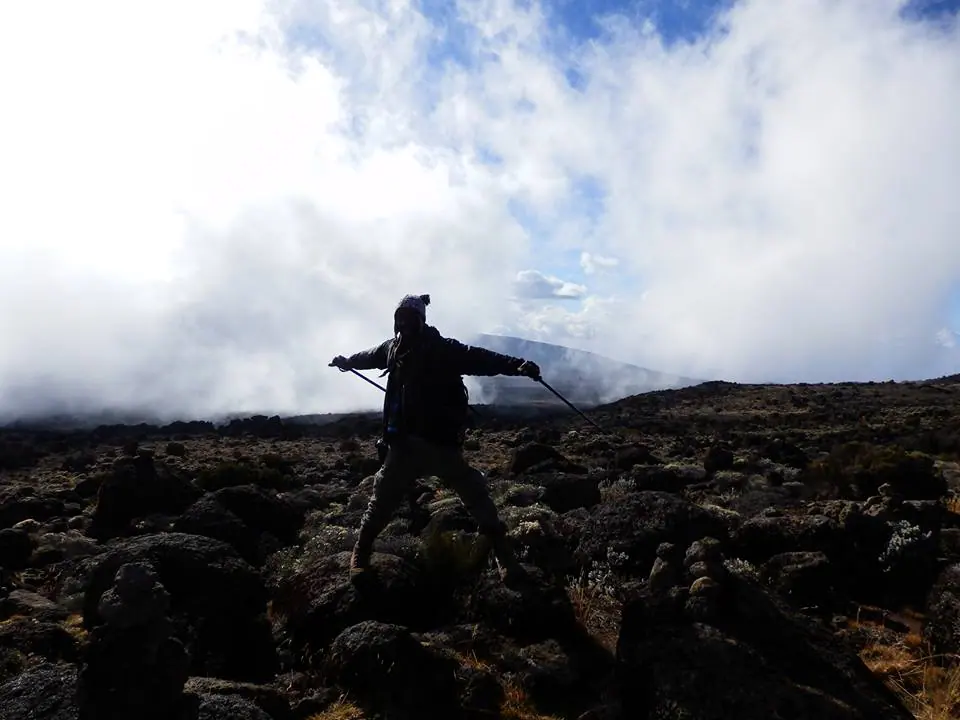
A mountain guide on Kilimanjaro
What makes a climb safe
- An itinerary with enough days to acclimatize
- Experienced, licensed guides who check each climber’s health every day
- A first-aid kit and emergency oxygen carried by the team
- A clear plan for descending and evacuating anyone who becomes unwell
- Good tents, sleeping mats and food, so you can rest and recover each night
- Travel insurance that covers trekking up to 6,000 metres and helicopter evacuation
The most important rule
Listen to your body and to your guide. If your guide decides you must descend, it is because your health is at risk, and going down quickly is the best treatment for altitude sickness.
Questions about safety on our climbs? Ask us; we are happy to explain how we organize every climb.
Photo credits
- A mountain guide on Kilimanjaro: Eid John, CC BY-SA 4.0
Photos from Wikimedia Commons, used under the licences named.
Published on 5 July 2025 Revised on 23 October 2026
Curious to discover more of Tanzania?
Our team in Arusha would be happy to answer your questions and help you plan your safari, climb or beach holiday.