

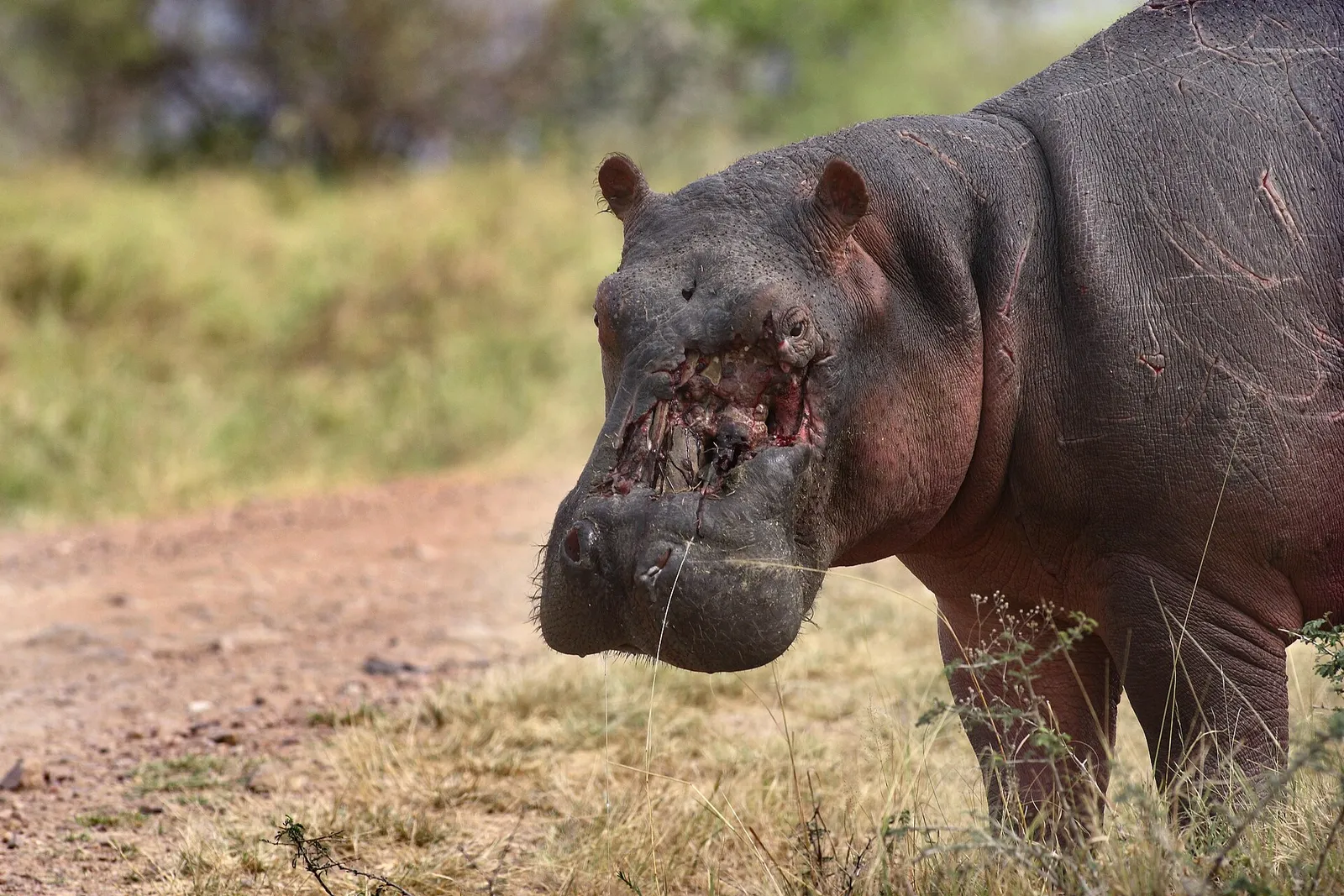
African Hippos
Hippopotamus in Tanzania
Hippos spend the day in rivers and pools, keeping cool in the water with only their eyes, ears and nostrils showing, and come out at night to graze on land. Despite their size, they can move surprisingly fast, and they are among the most dangerous animals in Africa if you get between them and the water.
Hippos live in groups led by a dominant male, and their deep, grunting calls are one of the classic sounds of an African night. Their skin produces a reddish fluid that protects it from the sun.
Good places to see hippos include the Retima hippo pool in the Serengeti, the Ngoitokitok spring in the Ngorongoro Crater, the hippo pool at Lake Manyara and the rivers of Ruaha and Nyerere.
Good to know
- An adult eats around 40 kilograms of grass in a night.
- Hippos cannot really swim; they walk or push off the bottom.
- A big male can weigh more than a tonne and a half.
Where to look: Serengeti, Ngorongoro, Lake Manyara.
Safaris where you may see hippos
 See All Safari Tours
Photo credits
- Acacia trees in Tarangire: Diego Delso, CC BY-SA 4.0
- African Hippos: Wolves201, CC BY-SA 4.0
- Crater World: Ngorongoro & Empakaai: Halidtz, CC BY-SA 4.0
- Great Migration River Crossing: Eric Inafuku, CC BY 2.0
- Lake Natron, Ngorongoro & African Village: Richard Mortel from Riyadh, Saudi Arabia, CC BY 2.0
- Natron Volcano Trek & Flamingo Lake: Richard Mortel from Riyadh, Saudi Arabia, CC BY 2.0
- Ngorongoro & Tarangire Walking Safari: Reginald Victor Runyoro, CC BY-SA 4.0
- Ngorongoro Sunrise at the Crater Rim: Diego Delso, CC BY-SA 4.0
Photos from Wikimedia Commons, used under the licences named.