

 Climbing
The greatest challenge on Kilimanjaro is not the walking but the altitude. As you climb, the air pressure falls and each breath brings less oxygen into your body. Most people feel some effects above about 3,000 metres. Understanding what happens, and how to help your body adapt, makes your climb safer and more enjoyable.
What is altitude sickness?
Acute mountain sickness (AMS) is the body’s reaction to climbing too high too fast. Mild AMS is common on Kilimanjaro and feels a little like a hangover:
- Headache
- Loss of appetite or nausea
- Tiredness and poor sleep
- Dizziness
In rare cases, AMS develops into high-altitude cerebral edema (HACE) or high-altitude pulmonary edema (HAPE), which are dangerous. Warning signs include confusion, loss of balance, severe headache that does not improve, breathlessness at rest and a persistent cough. The treatment is to descend immediately.
How to acclimatize
- Choose enough days. Itineraries of seven days or more give your body time to adapt.
- Walk slowly. “Pole pole”, slowly slowly, is the motto on Kilimanjaro. Walk at a pace where you can still talk.
- Climb high, sleep low. Routes such as Machame and Lemosho go up to the Lava Tower and back down to Barranco to help acclimatization.
- Drink plenty. Three to four litres of water a day.
- Eat, even if you are not hungry. Your body needs energy.
- Tell your guide how you feel. Honesty is important; small problems are easier to deal with early.
Medication
Some climbers take acetazolamide (Diamox) to help acclimatization. Talk to your doctor before your trip about whether it is right for you, and about any other medicines you take.
The role of your guides
Your guides check every climber’s health each day, watch for warning signs and decide when someone must go down. They carry a first-aid kit and emergency oxygen. Turning back is never a failure: the mountain will still be there, and your health comes first.
Photo credits
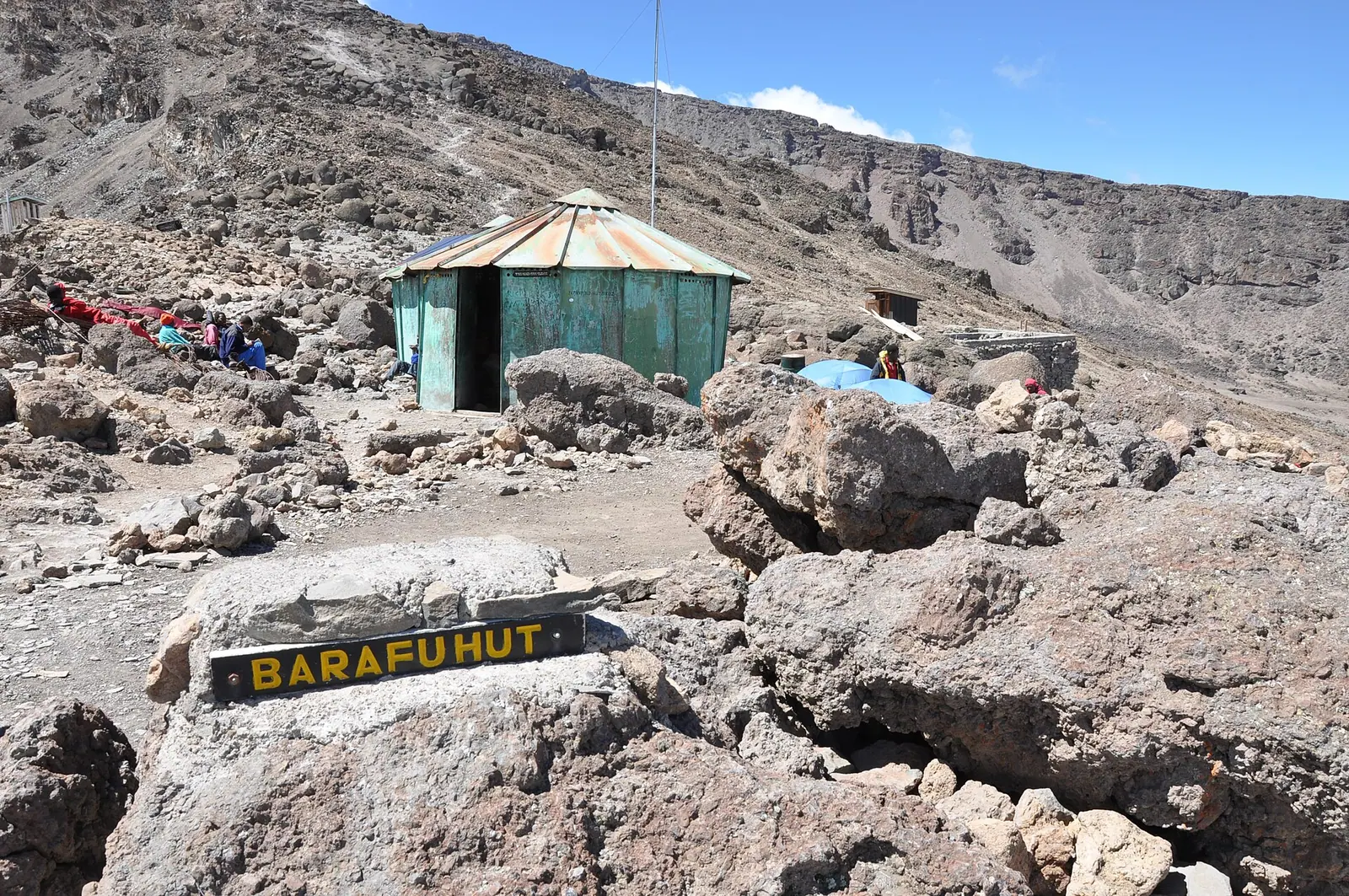
- Barafu Camp, at about 4,670 metres, the base for the summit: Jorge Láscar, CC BY 2.0
Photos from Wikimedia Commons, used under the licences named.
Curious to discover more of Tanzania?
Our team in Arusha would be happy to answer your questions and help you plan your safari, climb or beach holiday.