

 Climbing
Kilimanjaro has two rainy seasons: the long rains, from mid-March to May, and the short rains in November and early December. Climbs go ahead in both, and some people prefer them for the quiet trails. Here is what to expect and how to prepare.
What the rain means on the mountain
Most of the rain falls in the forest zone on the lower slopes, which can be very wet and muddy. Higher up, the weather is often cloudy, with rain or snow showers, and views may be limited. The long rains in April and May are the wettest period; in November the showers are usually shorter.
The advantages
- Far fewer climbers, even on popular routes
- A green, lush mountain, with flowering plants in the moorland
- Easier to find space at short notice
The best route in the rainy season
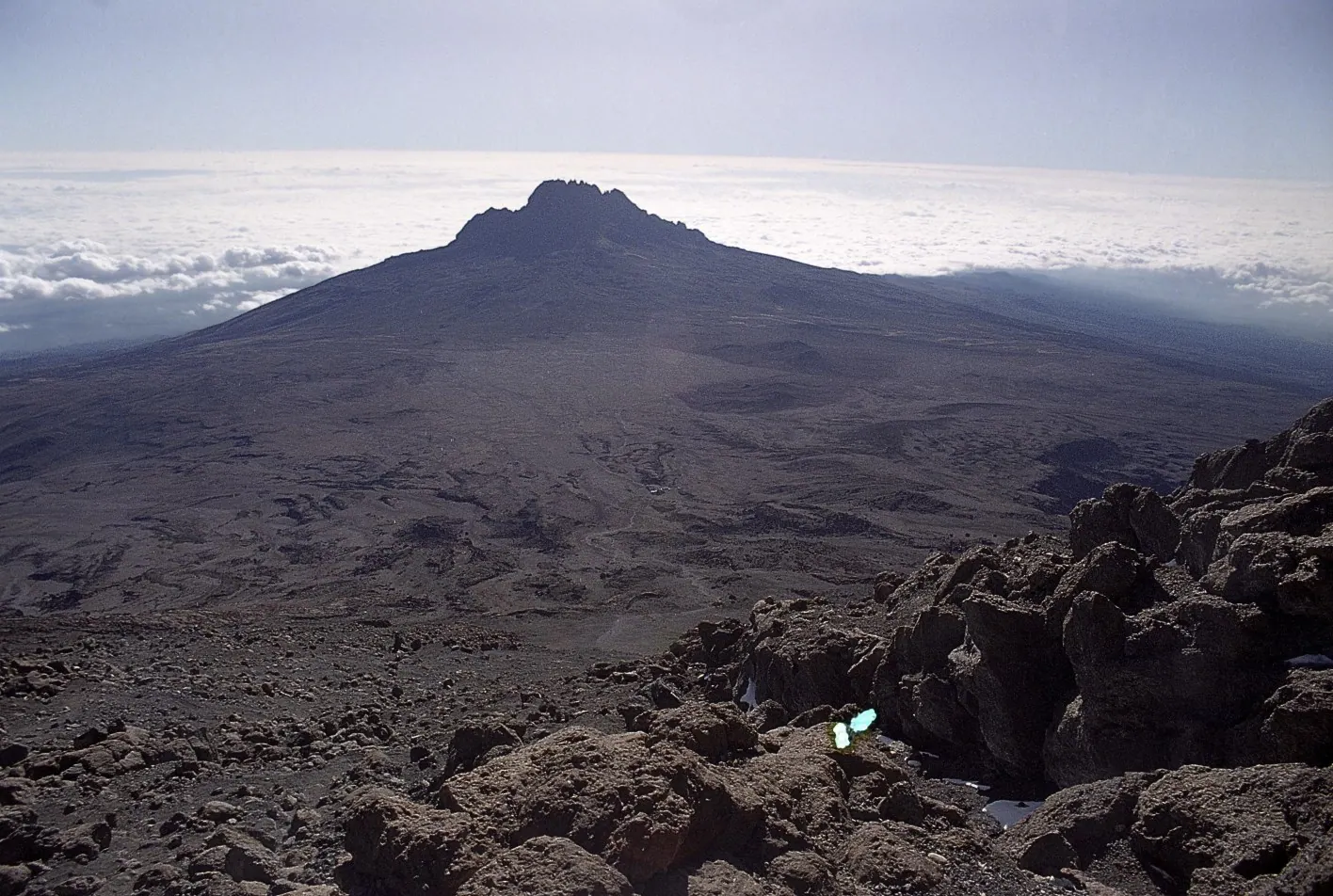
The northern side of Kilimanjaro is drier than the south, so Rongai is the most popular choice in the rainy months. Marangu, with its huts, is another option if you prefer a roof over your head.
What to pack
- A good waterproof jacket and over-trousers
- Waterproof boots and gaiters
- Dry bags or strong bin liners inside your duffel and daypack
- Spare socks and a dry set of clothes kept only for camp
- A rain cover for your daypack
Is it safe?
Yes, with an experienced crew. Paths are more slippery, so walking poles help, and guides keep a close eye on the weather. The same rules about acclimatization apply as in any season.
Not sure whether the rainy season is right for you? Read about the best time to climb Kilimanjaro.
Photo credits
- Mawenzi seen from the northern side of Kilimanjaro, on the Rongai route: Bbb, CC BY-SA 3.0
Photos from Wikimedia Commons, used under the licences named.
Curious to discover more of Tanzania?
Our team in Arusha would be happy to answer your questions and help you plan your safari, climb or beach holiday.