

 Safari
You do not need expensive equipment to come home with beautiful safari photos. A few simple habits make a big difference.
Equipment
- A zoom lens of at least 200 mm, or a camera with a long optical zoom, is ideal for animals at a distance.
- Bring spare batteries and memory cards: you will take more photos than you expect.
- A bean bag on the edge of the roof hatch keeps the camera steady.
- Phones are great for landscapes and close sightings; use the optical zoom, not digital zoom.
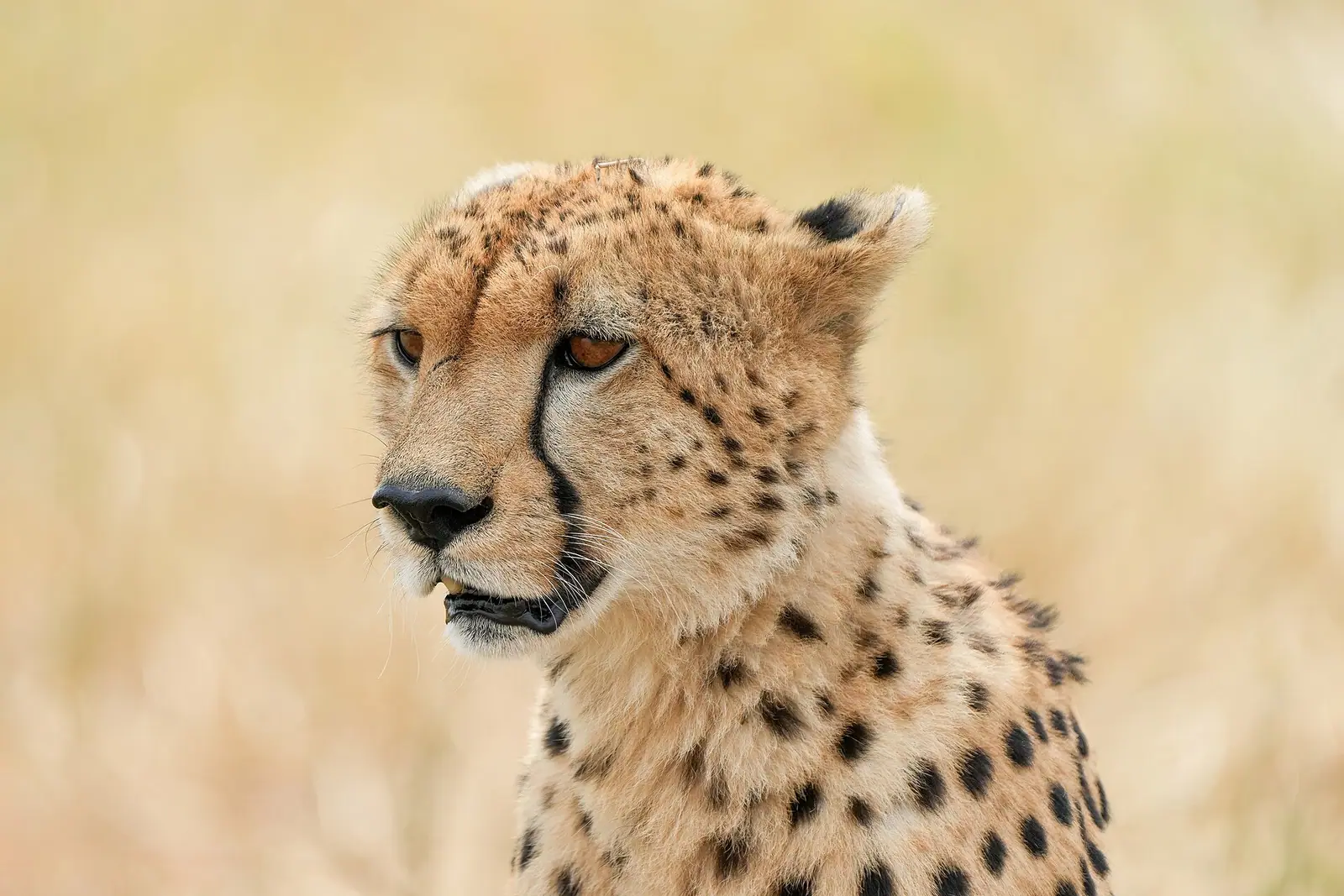
A cheetah in the Serengeti
Light
The best light is early in the morning and late in the afternoon, which is also when animals are most active. Midday light is harsh; use it for landscapes and portraits in the shade.
Settings
- Use a fast shutter speed (1/1000 s or faster) for moving animals and birds in flight.
- Focus on the eyes.
- Use burst mode for action.
- Ask your guide to switch off the engine to avoid vibration.
Composition
- Leave space in the direction the animal is looking or moving.
- Get down to the animal’s eye level when you can.
- Include the landscape sometimes: a small elephant under a huge baobab tells a story.
- Look for behaviour: play, hunting, grooming, mothers with young.
Patience
The best photos often come after waiting. On a private safari, you can ask your guide to stay at a sighting as long as you like.
Note: drones are not allowed in the national parks without a special permit.
Photo credits
- A cheetah in the Serengeti: Giles Laurent, CC BY-SA 4.0
Photos from Wikimedia Commons, used under the licences named.
Published on 2 August 2025 Revised on 23 October 2026
Curious to discover more of Tanzania?
Our team in Arusha would be happy to answer your questions and help you plan your safari, climb or beach holiday.