

Kilimanjaro Guides and Porters
Kilimanjaro Guides and Porters
Nobody climbs Kilimanjaro alone. Park rules require every trekker to go with a licensed guide, and on a camping route a whole crew walks with you: guides, a cook, porters who carry the tents, food and water, and often a waiter who looks after the mess tent. The way this team works together shapes your days on the mountain far more than the route you pick.
This page explains who is in a Kilimanjaro crew, what each person does, and what you can expect from the team that climbs with you when you travel with Collin Africa.
Who is in your crew?
Lead guide
Your lead guide is in charge of the climb. He or she sets the pace, decides when to rest, briefs you every evening, and makes the safety decisions, including the hardest one: turning back when someone’s health is at risk. A good lead guide has climbed the mountain many times and can read both the weather and the people in the group.
Assistant guides
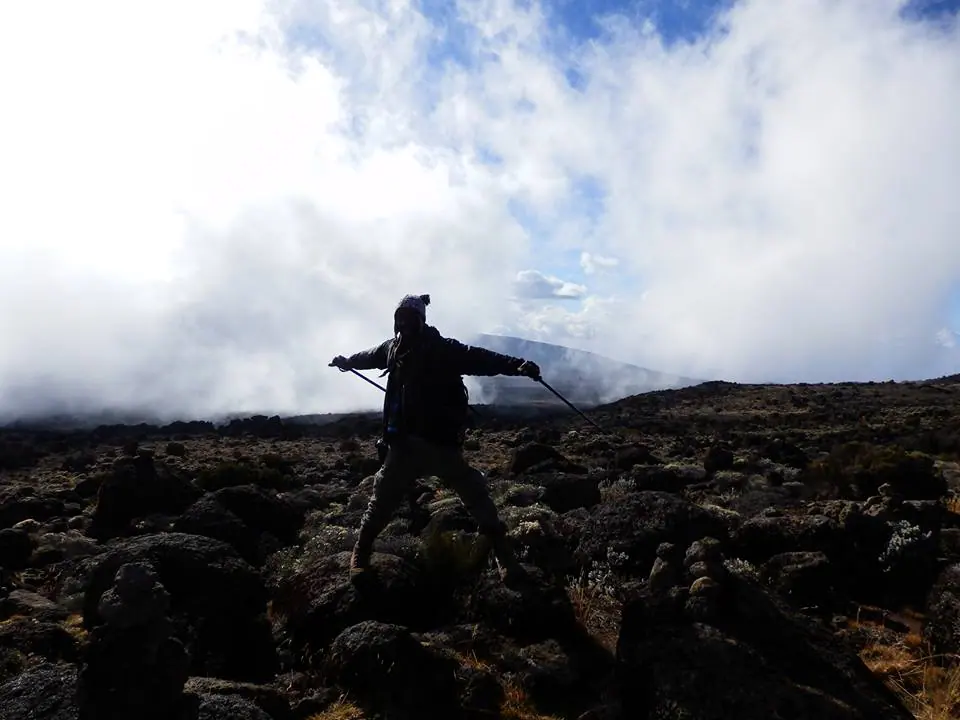
On most climbs, there is one assistant guide for every two or three trekkers, so that someone can walk down with a climber who needs to descend without stopping the rest of the group. On summit night, the assistant guides stay close to each climber.
Cook and waiter
Three hot meals a day at altitude take skill. The cook plans food that is easy to digest and rich in energy, and the waiter serves it and keeps you supplied with hot drinks and safe drinking water.
Porters
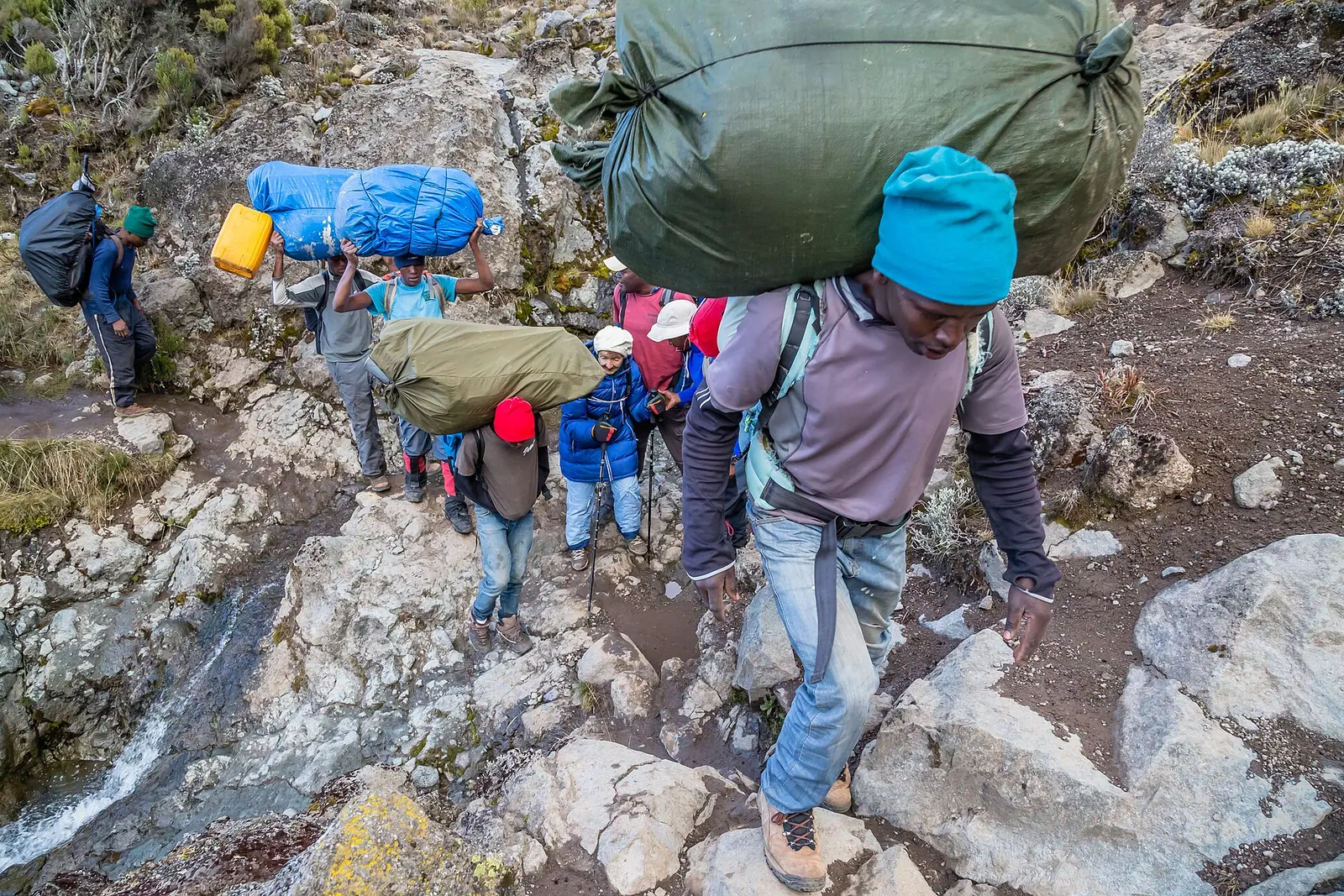
Porters carry everything the expedition needs between camps: tents, sleeping mats, food, cooking gear, fuel and your duffel bag. They set up camp before you arrive and pack it after you leave. Most porters come from the villages on the slopes of Kilimanjaro, and for many families this work is an important income.
How porters should be treated
Porters do the hardest work on the mountain, and how a company treats them says a lot about it. Kilimanjaro National Park limits the weight a porter may carry, and every load is weighed at the gate. Beyond the rules, a fair climb means:
- fair wages, paid in full and on time;
- loads within the park limit;
- proper clothing, boots and a warm place to sleep;
- enough food during the climb;
- care and a safe descent for anyone who falls ill.
When you plan your climb with us, ask us anything you like about the crew. We are happy to tell you how the team is organized.
What makes a good Kilimanjaro guide?
Mountain experience
Knowing the route, its camps and its weather is the basis of everything. An experienced guide knows where the trail is slippery after rain, where the wind is strongest on summit night, and how long each stage really takes at your pace.
First aid at altitude
Altitude sickness is the main risk on Kilimanjaro. Guides check each climber’s health every day, watch for early signs of trouble and know when the only safe answer is to go down. They carry a first-aid kit, and should be able to arrange an evacuation if one is needed.
Leadership and encouragement
Summit night is long, cold and dark. A guide who knows when to encourage, when to slow down and when to make a joke can make the difference between giving up and reaching the crater rim.
Knowledge of the mountain
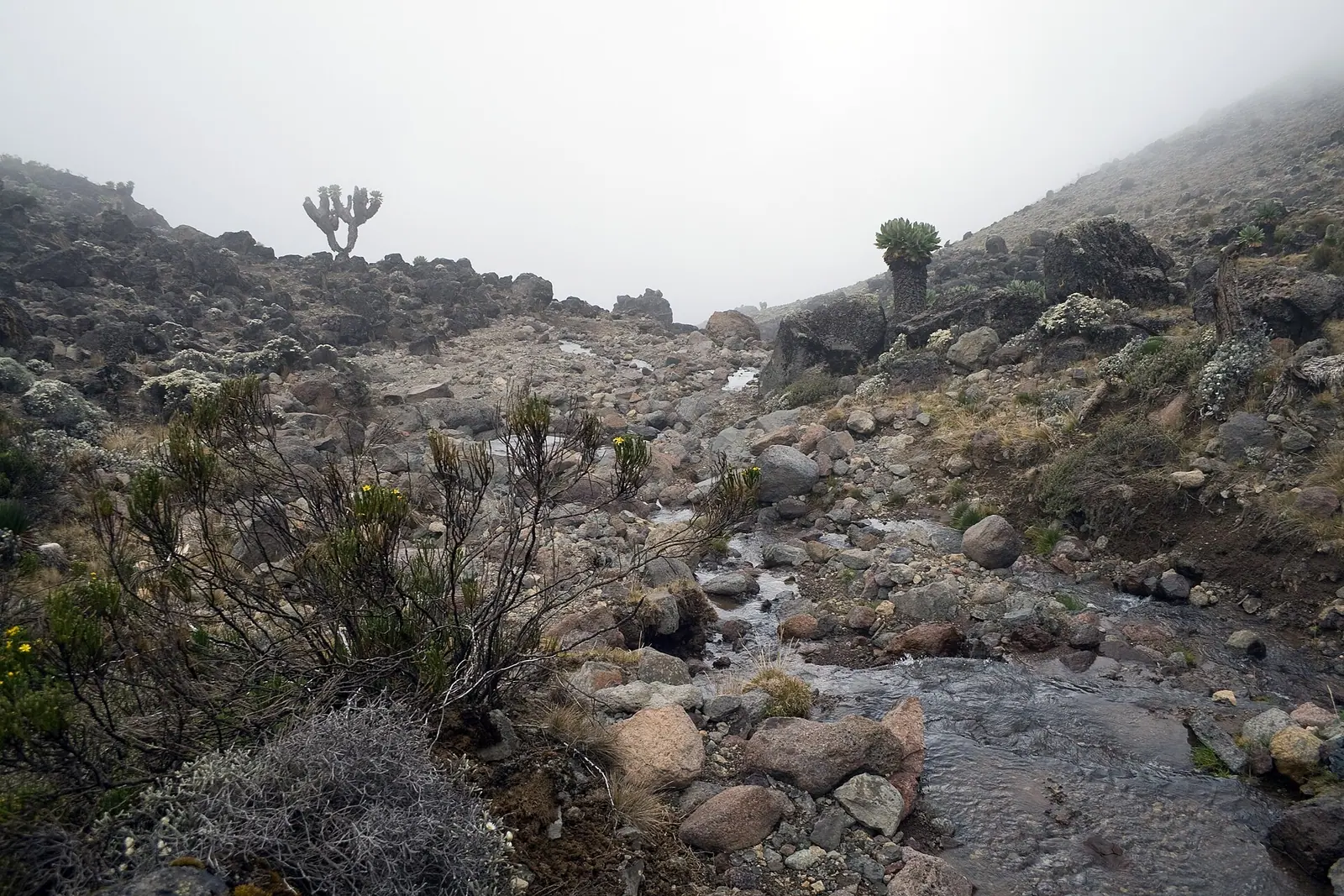
The best guides make the climb more than a walk: they point out the giant groundsels and lobelias, the birds and the views, and explain the history of the mountain and the people who live around it.
Tipping on Kilimanjaro
Tipping the crew at the end of the climb is a long-standing custom on Kilimanjaro, and a welcome part of the crew’s income. The amount depends on the size of your group and the length of the climb; we send you a simple guideline with your booking, so that you can bring the right amount in cash. Tips are usually handed over at a short ceremony on the last morning, where the whole team says goodbye.
Choosing who you climb with
When you compare offers for a Kilimanjaro climb, look beyond the price. Ask how many guides will be with your group, how the crew is paid, what medical equipment the guides carry and what happens if someone needs to descend. A clear answer to each of these questions is a good sign.
Have a question about the crew or about your climb? Write to us at info@collinafrica.com and we’ll be glad to help.
Photo credits
- A guide on the trail on Kilimanjaro: Eid John, CC BY-SA 4.0
- Giant groundsels on the slopes of Kilimanjaro: Stig Nygaard, CC BY 2.0
- Porters on Kilimanjaro: Sergei Andreichuk, CC BY-SA 4.0
Photos from Wikimedia Commons, used under the licences named.