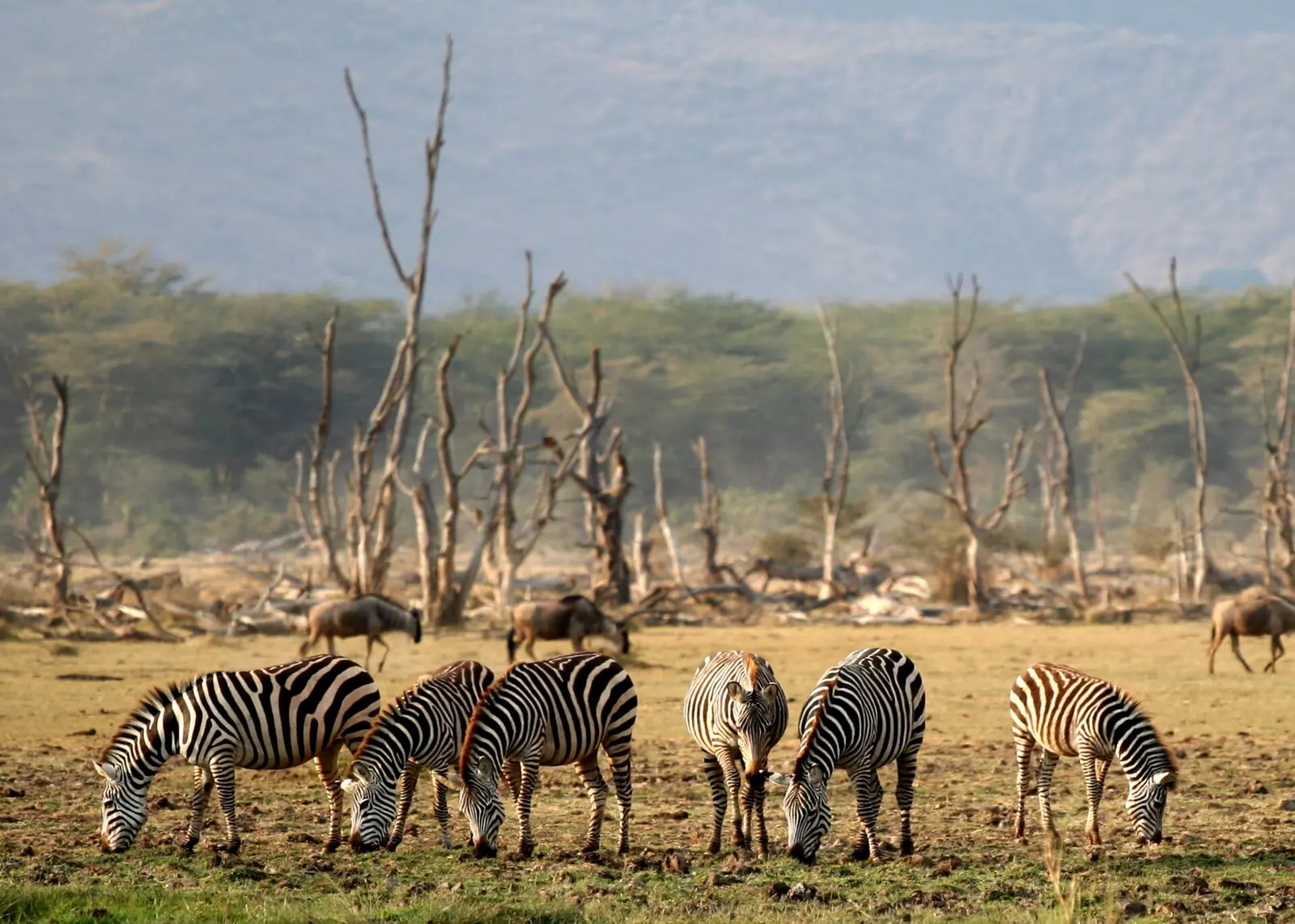
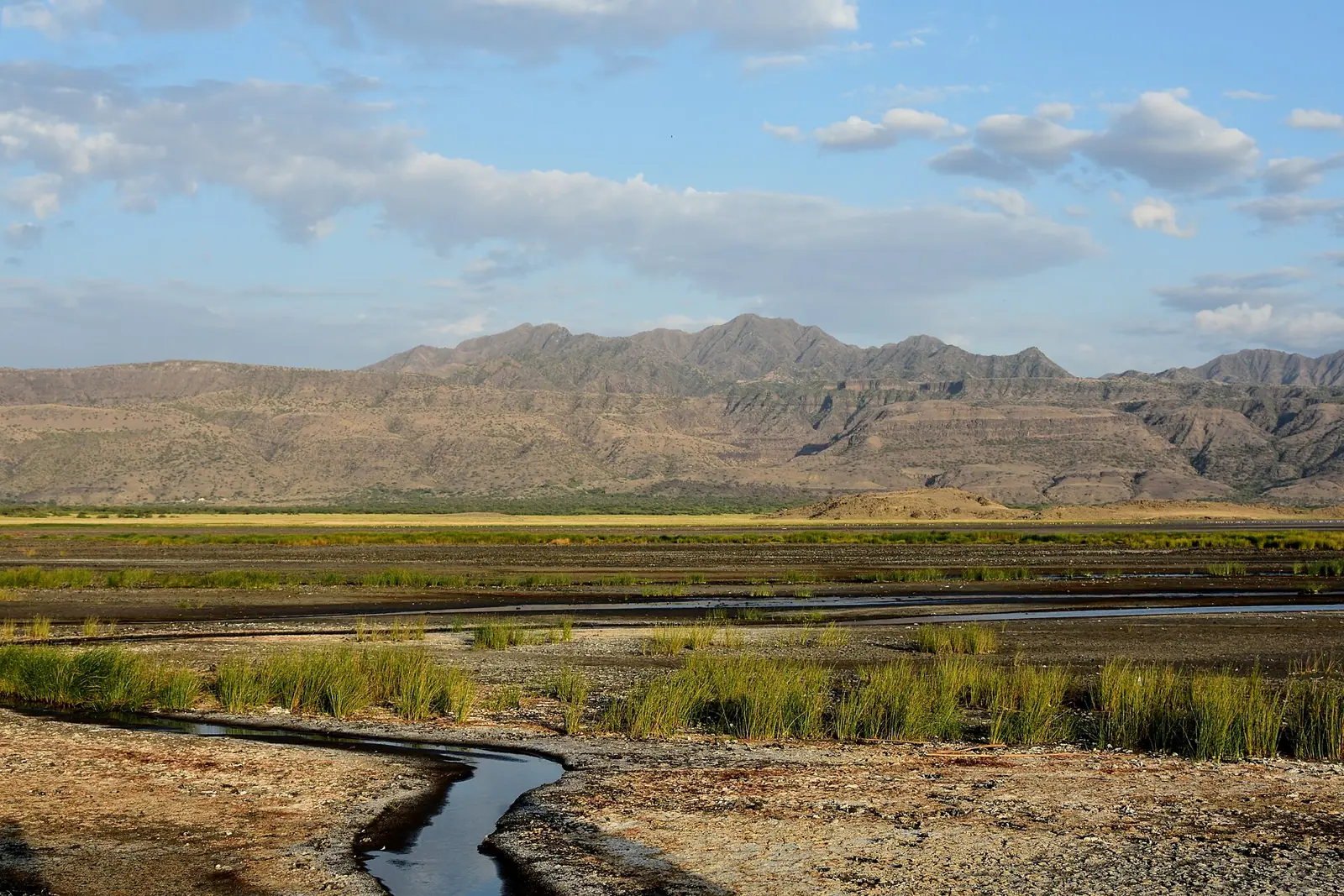
Lake Natron lies in the far north of Tanzania, close to the Kenyan border, in one of the hottest and most remote corners of the Rift Valley. It is a shallow soda lake, rarely more than a few metres deep, whose water is so alkaline that few animals can live in it. In the dry season, salt crusts and algae paint the shallows in shades of red, pink and orange.
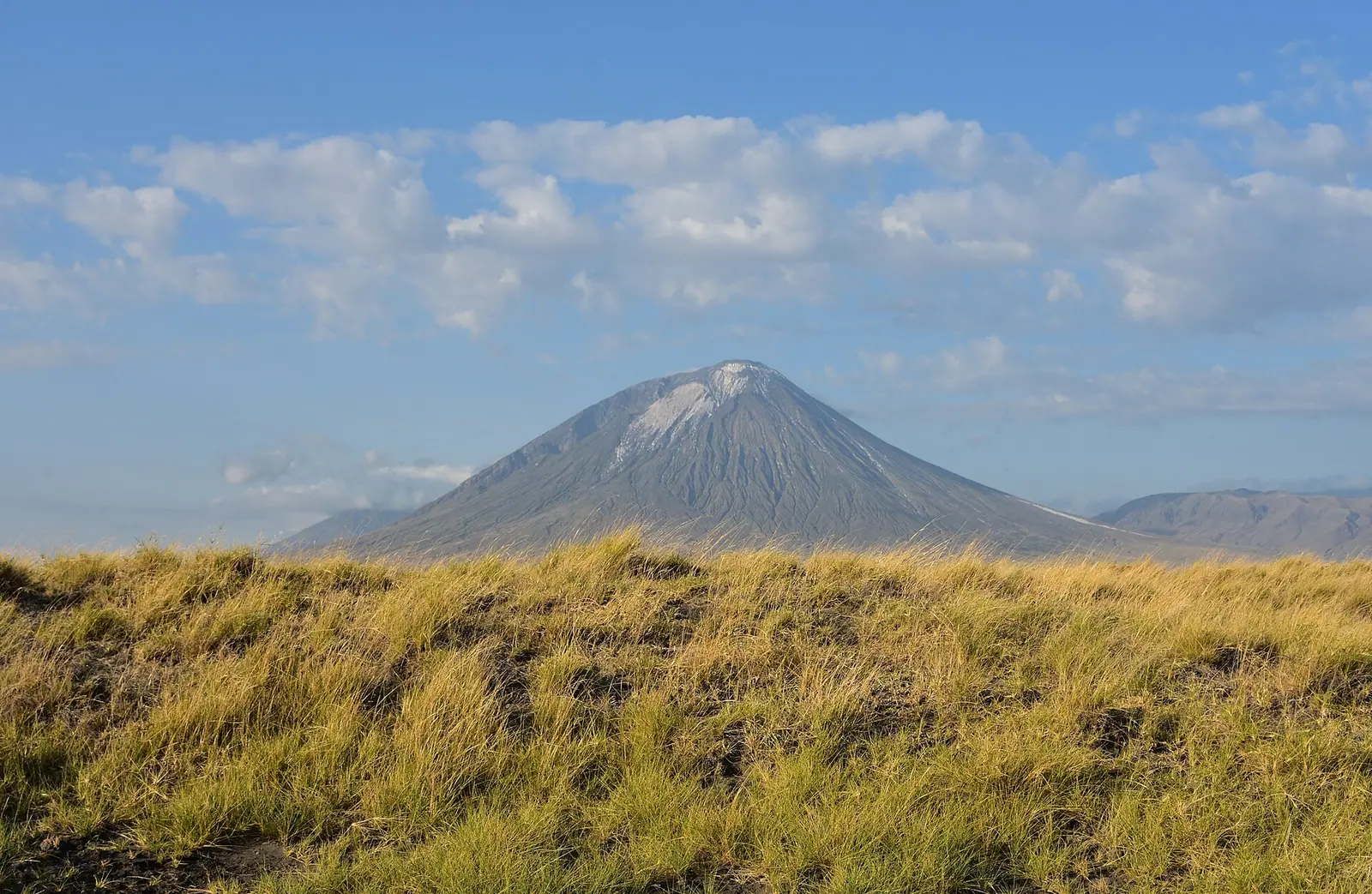
Above the lake rises Ol Doinyo Lengai, the “Mountain of God” of the Maasai and the only active volcano in the world that erupts natrocarbonatite lava, which is black when it flows and turns white as it cools.
At a glance
Location
Northern Tanzania, near the Kenyan border
Lake
shallow soda lake, size changes with the seasons
Famous for
Lesser flamingos, Ol Doinyo Lengai
Altitude
about 600 m (very hot)
Best time
June to October
Days to plan
1 to 2 nights
From Arusha
4–5 hours by road
Volcano
Ol Doinyo Lengai, 2,962 m
Flamingos
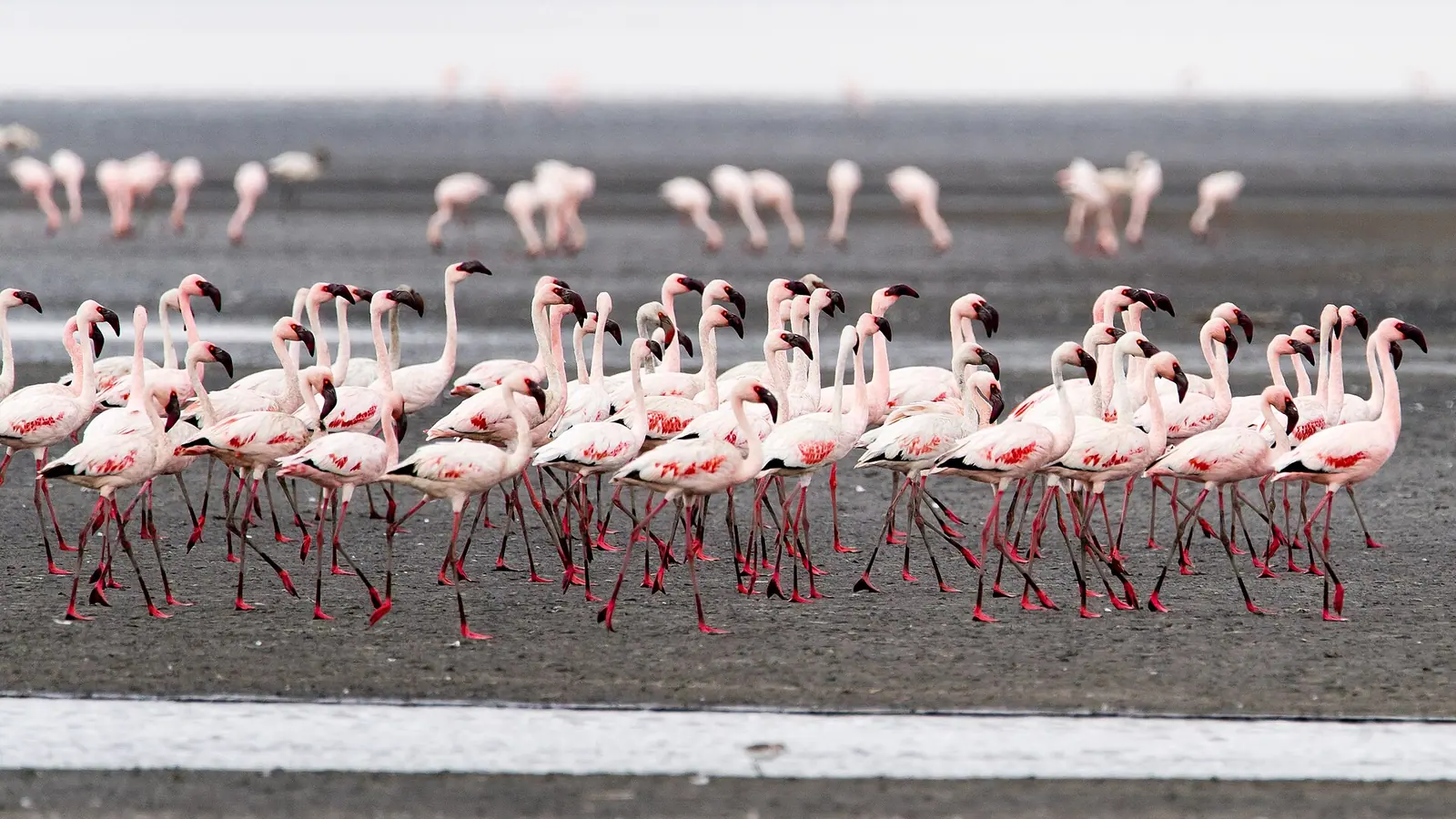
Lake Natron is the most important breeding site in the world for the lesser flamingo. The birds feed on algae across the soda lakes of East Africa and come here to nest on islands of mud and salt far out in the lake, where few predators can reach them. The nesting colonies cannot be visited, but flamingos feed along the shore near Engare Sero for much of the year.
The dry season, from June to October, is the best time, when the tracks are passable and the lake shows its colours. December to February is also good. In the long rains, from March to May, the roads can be difficult. Lake Natron is hot all year, with daytime temperatures often above 35 °C, so plan walks for the morning and late afternoon.
Getting there
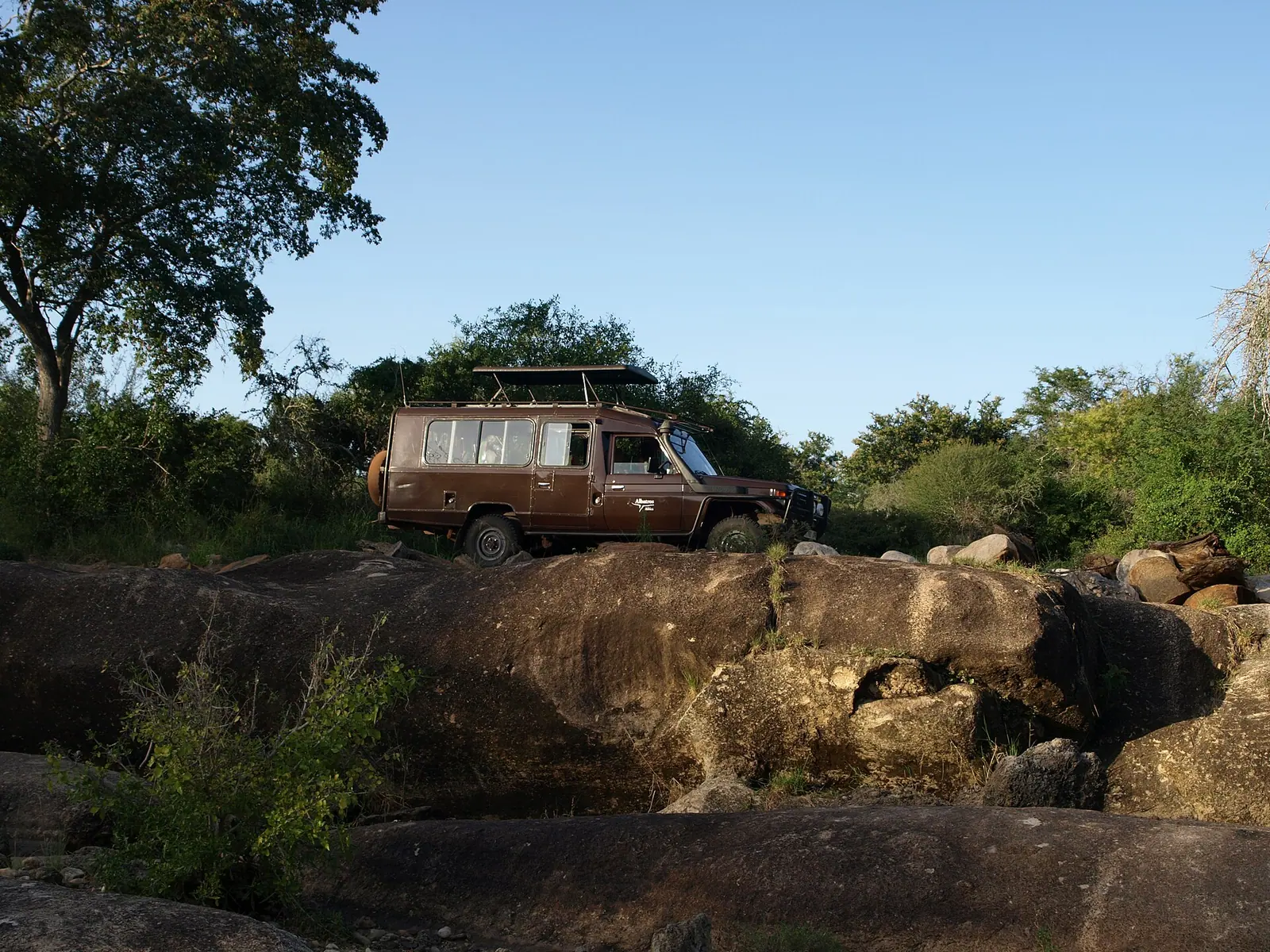
Lake Natron is four to five hours’ drive from Arusha via Mto wa Mbu, the last part on a rough gravel road. Many guests combine it with Ngorongoro, or continue north to the Serengeti through the Loliondo area. Accommodation is in simple tented camps and lodges near Engare Sero.
A fragile place
Natron’s ecosystem depends on the right balance of fresh and salty water. Plans for soda ash extraction and for dams on the rivers that feed the lake have been put forward over the years, and conservation organizations follow them closely, because the lake is so important for the lesser flamingo.
No. The water is strongly alkaline and can burn skin and eyes. Swim instead in the pools of the Engare Sero waterfall.
Is it true that the lake turns animals to stone?
Animals that die in the lake can be preserved by the minerals in the water, which has led to stories of a lake that turns animals to stone. The water is harmful, but it does not petrify animals instantly.
Is Lake Natron worth the drive?
If you like wild, empty landscapes, yes. It feels very different from the national parks, with no crowds and dramatic scenery.
Plan your visit to Lake Natron
Tell us when you would like to travel and what you would like to see, and we will send you an itinerary and a price.


 4 days