

Mount Kilimanjaro: Routes, Prices & Safety
Good to Know Before You Climb Kilimanjaro
When to Climb Mount Kilimanjaro
The best periods for a Kilimanjaro climb are late December to early March and mid-June to late October, when the weather on the mountain is close to perfect. The other months do bring rain, but that rarely means heavy downpours all day. Rain usually arrives in the afternoon, so even in the wet season trekkers get a good stretch of clear weather each day, and some days stay completely dry. Learn more about the seasons of Kilimanjaro.
Which Kilimanjaro Itinerary Is the Safest?
The safest climbs on Kilimanjaro are generally 7–8 day itineraries, which allow your body the time it needs to adapt to high altitude and noticeably raise your chances of reaching the summit.
That said, the experience and judgment of your guides matter just as much as the route you pick. Seasoned guides keep an eye on how you acclimatize, look out for signs of altitude sickness and slow the pace whenever needed.
What makes a Kilimanjaro climb safer:
- 7–8 day itineraries for smoother acclimatization
- Seasoned guides who keep track of your health and how you adapt to altitude
- A gradual ascent that follows the climb high, sleep low principle
- A flexible pace, with decisions made around how climbers are feeling
- The right safety equipment, including oxygen and medical kits
Of all the routes, the Lemosho Route is often regarded as one of the safest, thanks to its longer itinerary and gentle acclimatization profile.
How Should I Prepare Physically for Kilimanjaro?
A moderate level of fitness makes your Kilimanjaro climb more comfortable and more likely to succeed. As a guide, you should be able to run 5 km (3 mi) with ease and walk 10 km (6+ mi) in a day. Swimming, cycling, running and hiking are all excellent ways to train.
Our Kilimanjaro training plan has a full, step-by-step program.
Altitude Sickness and the Risks of Climbing Kilimanjaro
The greatest risk on Kilimanjaro is acute mountain sickness (AMS), caused by climbing too high too fast. In rare cases it develops into high-altitude cerebral or pulmonary edema, which are life-threatening and need an immediate descent.
The good news is that AMS can usually be prevented. Choose an itinerary of seven days or more, drink plenty of water and walk slowly so your body can adapt. Experienced guides matter too: they watch every climber closely, recognize the early signs of altitude sickness and know when the right decision is to go down.
Booking Your Mount Kilimanjaro Climb with Collin Africa
Booking a climb with us is simple. Tell us your dates, how many people are climbing and which route you like, and we send you a day-by-day plan and a quote. Your climb is confirmed once we receive the deposit stated in your quote. Before you travel we send you a packing list and answer any questions, and the day before the climb your guide meets you at your hotel for a briefing and a gear check.
Kilimanjaro Climbing FAQs
Which Travel Insurance Do You Recommend for Kilimanjaro?
Travel insurance is a must for a Kilimanjaro climb. Check that your policy covers trekking up to 6,000 metres, helicopter evacuation and medical treatment: many standard policies stop at much lower altitudes, so read the small print before you buy.
How Do I Get to Mount Kilimanjaro?
The simplest way to reach Mt Kilimanjaro is to fly into Kilimanjaro International Airport (JRO) in Tanzania. From the airport it’s a 50-minute drive to Moshi, the starting point for most climbs. Major carriers including Turkish Airlines, Qatar Airways, KLM, Ethiopian Airlines and Air France fly to JRO.
You can also fly into Dar es Salaam and take a domestic flight to Kilimanjaro, or fly into Nairobi in Kenya and travel to Moshi by shuttle bus, which takes most of a day and needs a Kenyan visa. For most travelers, flying straight to JRO is the easiest option.
Kilimanjaro Weather and Trail Conditions: Wet vs Dry Seasons
Tanzania has two rainy seasons and two dry seasons. The short rains start in early November and continue until late December. A dry season follows and lasts until mid-March, after which the long rains arrive and run until mid-June.
If you are climbing in the rainy season, consider the northern side of the mountain, which receives noticeably less rain than the southern slopes. Rongai, the Northern Circuit and Marangu are good choices for these months.
How Long Does It Take to Reach the Summit of Kilimanjaro?
Summiting Mount Kilimanjaro isn’t a race. It’s a steady climb through changing climate zones and ever thinner air. The shortest itineraries last about 5 days, but most climbers spend 6 to 8 days on the mountain so their bodies can adapt to the altitude.
Longer routes give you far better acclimatization and a much greater chance of standing on the Roof of Africa. Some extended itineraries, including those with a night in the crater close to the summit, run to ten days or more. For a full look at routes and daily trekking times, read how long it takes to climb Kilimanjaro.
Photo credits
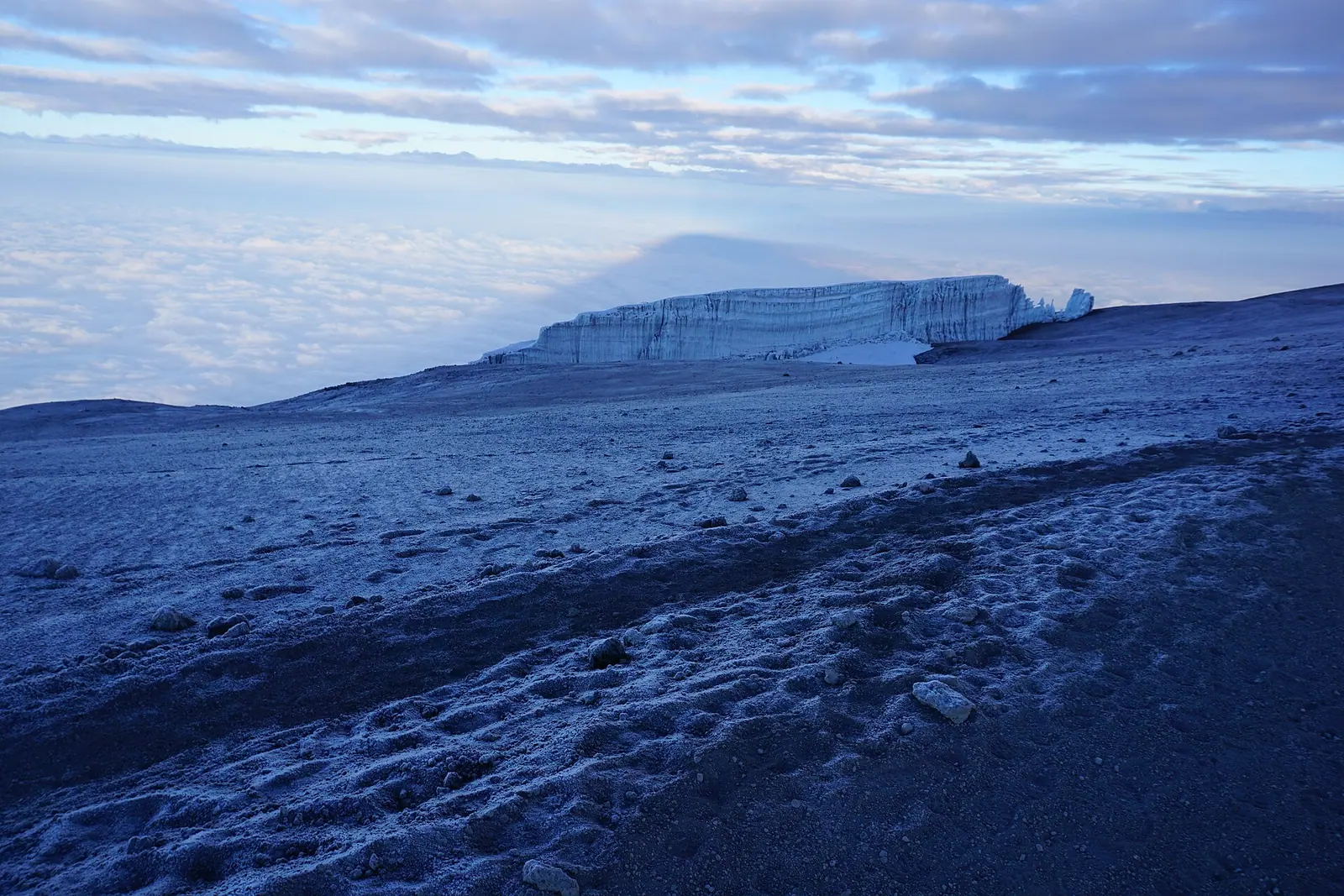
- Glaciers at the top of Kilimanjaro at sunrise: Roryjm0, CC BY-SA 4.0
Photos from Wikimedia Commons, used under the licences named.